
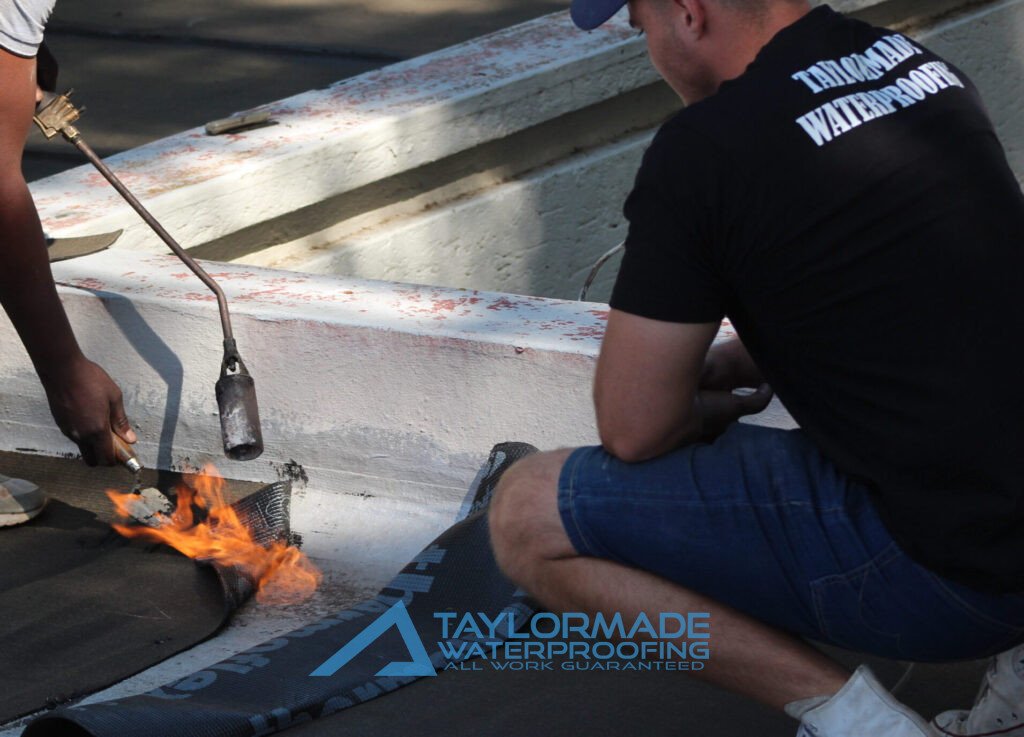
Choosing the right waterproofing system for your flat roof is crucial. Here’s an honest comparison of torch-on and liquid waterproofing to help you decide which is best for your property
Torch-On vs Liquid Waterproofing: Which Is Better?
When choosing the right waterproofing system for your roof, it helps to understand the differences between torch-on waterproofing and liquid applied waterproofing. Both methods create protective barriers, but they work in different ways and suit different applications, especially under South African weather conditions.
What Is Torch-On Waterproofing?
Torch-on waterproofing uses modified bitumen sheets that are heated with a gas torch to fuse them securely to the roof surface. This process forms a tough, uniform layer that is highly durable and resistant to UV, temperature changes, and regular wear. It’s especially suited for large flat roofs and areas where long-term protection is needed.
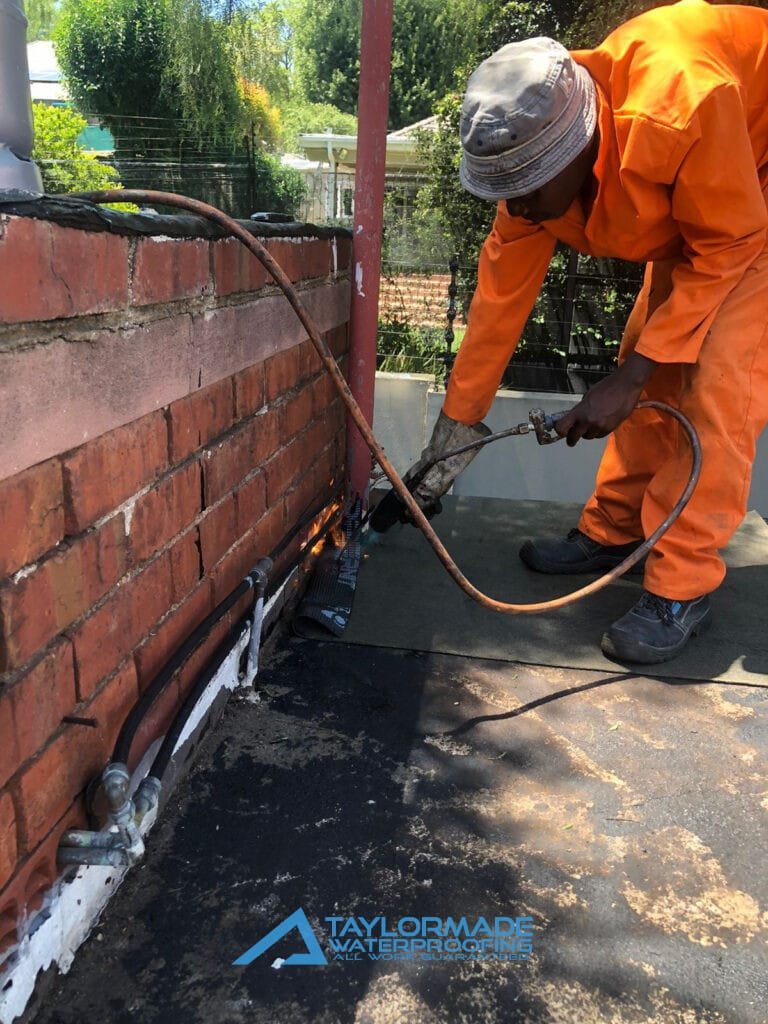
Key Features:
- Excellent puncture resistance and UV stability
- Long lifespan when installed professionally
- Best for large, uncomplicated roof surfaces
What Is Liquid Waterproofing?
Liquid waterproofing involves applying a specialised coating, such as acrylic or rubber-based membranes, directly onto the roof surface in liquid form. Once cured, it creates a seamless, flexible waterproof layer that adapts easily to roof details and penetrations.
Key Features:
- Seamless, joint-free membrane that reduces weak points
- Excellent flexibility for complex roof details
- Applied without an open flame — safer and often faster to install
Key Differences & Benefits
Here’s how the two systems compare on common considerations:
- Durability: Torch-on membranes often offer a longer service life due to thicker material and consistent layering, making them ideal for flat roofs and commercial applications.
- Flexibility: Liquid systems remain highly elastic after curing, which helps them handle building movement and irregular surfaces better than sheet membranes.
- Seamlessness: Liquid waterproofing creates a single, jointless membrane that eliminates potential weak points where water can penetrate.
- Safety: Liquid systems are applied cold (no torch), reducing fire risk during installation.
- Application Complexity: Torch-on requires specialist skills and careful heat control, while liquid membranes can often be rolled, brushed, or sprayed by trained technicians.
Which Is Best for Your Property?
- Choose torch-on waterproofing if you have a large flat roof with minimal penetrations and want a highly durable, long-lasting membrane.
- Choose liquid waterproofing when your roof has complex details, many penetrations, or you prioritise a fully seamless membrane.
Both systems can provide excellent protection when installed correctly — a professional assessment ensures you choose the right method for your specific roof and location.
Need Expert Advice?
Get a free assessment from our waterproofing specialists. We’ll help you choose the right solution for your roof.
Follow Us
Contact Taylormade Waterproofing for expert advice and quality installation
Whether you need repairs, maintenance, or a complete waterproofing installation, Taylormade Waterproofing delivers expert workmanship and dependable protection. Contact us today to discuss your requirements.
